
GamerXZenith
Well-Known Member
- Credits
- 410
From FIFA packs to Genshin Impact wishes, modern games use casino psychology perfected by slot machines. Here's how to recognize the manipulation tactics.
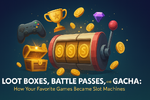
That dopamine rush when you open a loot box? Casinos perfected it decades ago. Game companies just copied the playbook.
You're sitting there playing your favorite game when a notification pops up: "Legendary Drop Available - Limited Time!" Your heart rate picks up. You hover over the purchase button, knowing the odds are terrible and you probably won't get what you want. But maybe this time... You hit purchase. The animation plays, colors swirl, music builds. Then a common item appears. Again. "One more try," you think. Congratulations, you just fell for the exact psychological manipulation that casinos spent fifty years perfecting.
Now open FIFA Ultimate Team. Or Genshin Impact. Or CS:GO.
Notice anything familiar?
Loot boxes are slot machines. You pay money. Random Number Generator determines the outcome. You receive a reward of varying value. The core loop is identical to pulling a slot lever, except instead of cherries and sevens, you get weapon skins and character cards.
Gacha systems are slot machines with extra steps. The banner changes. The featured character rotates. The pity system creates the illusion of guaranteed progress. But you're still spinning a digital wheel, hoping for rare outcomes determined by programmed odds.
Card pack systems are slot machines in sports jerseys. FIFA, NBA 2K, Madden. These multi-billion-dollar franchises run on the exact same principle as casino slot floors. Pay for a pack. Hope for rare cards. Get mostly commons. Buy another pack.
The only difference? Casinos are legally required to disclose odds. Game companies fought disclosure requirements for years.
Traditional slot machines were simple. Insert coin, pull lever, receive outcome. But as slots moved online in the late 1990s, developers faced the same challenge game companies deal with today: keeping digital audiences engaged.
Modern online slots borrowed heavily from video game design. Elaborate bonus rounds that feel like mini-games. Achievement systems reward frequent play. Themed content based on popular culture. Story elements rarely seen in physical casino slots.
The feedback loop worked both ways. While slots were borrowing engagement mechanics from games, game developers were studying slot machine mathematics to optimize loot box odds and payout rates.
Here's the crucial difference. Regulated online slots must disclose their RTP percentages and odds. A slot with 96% RTP means that mathematically, for every $100 wagered, $96 returns to players over time. The house edge is transparent and legally enforced.
Video game loot boxes? They fought odds disclosure for years. When various countries began requiring it, the numbers shocked players. That legendary skin you want? Sometimes 0.5% drop rate or lower. Odds that would make even aggressive slot designs look generous.
The slot industry also learned the hard way about age restrictions and gambling addiction. Strict regulations prevent minors from playing. Self-exclusion programs help problem gamblers. Mandatory warnings about odds appear on every site.
Video games? Many are rated for children and include loot box systems with worse odds than regulated gambling, no age verification, and minimal addiction support.
Variable Reward Schedules are the foundation. Psychologist B.F. Skinner discovered that unpredictable rewards create stronger conditioning than predictable ones. Slot machines use variable reward schedules. So do loot boxes.
Near-Miss Manipulation keeps you trying. When you get two legendary symbols and one common, your brain registers it as "almost winning" even though you definitely lost. Casinos engineer this feeling deliberately. So do game developers.
Watch what happens when you open ten loot boxes in a row. You'll get several results that feel close to what you wanted. Character shards for heroes you don't own. Weapons for classes you don't play. Item's one rarity tier below what you need.
These aren't accidents. They're designed to make you feel like success is just one more purchase away.
Loss Aversion drives continued spending. You've already invested $50 in loot boxes. The sunk cost fallacy tells you that quitting now means wasting that money. One more purchase might validate the previous spending.
FOMO (Fear of Missing Out) accelerates decisions. Limited-time banners. Seasonal loot boxes. Exclusive skins available for 48 hours only. The artificial scarcity creates urgency that bypasses rational thinking.
FIFA Ultimate Team puts the best players in the rarest packs. Want a competitive team? Either spend hundreds on packs or grind for months. Professional FIFA players routinely spend thousands during Team of the Year promos because their careers depend on having meta squads.
Genshin Impact sells power through character gacha. Yes, skill matters. But a fully upgraded five-star character with a signature weapon dramatically outperforms basic equipment. The game is playable for free, but the best experience costs thousands.
These aren't cosmetic systems. They're pay-to-win schemes wrapped in gambling mechanics.
This ignores how game design has changed around monetization.
Modern games aren't designed first with monetization added later. They're designed around monetization with gameplay built to support it.
Even beloved franchises like Sonic the Hedgehog have expanded into movies and merchandise, showing how gaming IP now extends far beyond the games themselves - including monetization strategies that follow players across platforms.
Daily login bonuses create habitual engagement. Miss a day, lose rewards. This isn't player-friendly generosity. It's casino-style loyalty programs designed to make leaving feel costly.
Battle passes transform games into part-time jobs. Complete daily challenges. Finish weekly missions. Play enough hours to maximize your $10 investment. The pass isn't optional content. It's the game's primary progression system with a paywall.
Premium currencies obscure real costs. If a skin costs 1,800 V-Bucks and you can buy 1,000 or 2,500, you're left with leftover currency nudging you toward future purchases. Casinos use chips for the same reason. Psychological distance from real money reduces spending pain.
You can't "just not engage" with monetization that's woven into core progression.
Belgium banned loot boxes entirely in 2018. Their gaming commission investigated FIFA, Overwatch, and CS:GO, declaring their systems illegal gambling. EA removed FIFA points from Belgian accounts rather than comply.
The Netherlands took similar action. FIFA had to remove pack-opening animations and preview pack contents. Changes that made the system significantly less appealing, proving that the psychology was the product, not the items.
The UK is considering loot box regulation after studies showed links between loot box spending and problem gambling behaviors.
The global regulatory patchwork creates absurd situations. The same game is legal entertainment in the US, restricted gambling in the Netherlands, and outright illegal in Belgium.
Set hard spending limits before playing. Decide your monthly entertainment budget and stick to it. Use prepaid cards instead of linking credit cards. The friction of reloading funds creates decision points that interrupt impulse spending.
Recognize artificial urgency. Limited-time offers create false pressure. That exclusive skin will likely return eventually. Step back and ask if you'd buy it without the time pressure.
Calculate true costs. Before pulling that gacha banner, multiply the average cost by how many characters you want. When the realistic cost is $500, suddenly your $20 "trying your luck" looks like the opening move in a much more expensive commitment.
Avoid "just one more" thinking. This is the core addiction mechanism. Set a specific limit before starting. If you decide on ten pulls maximum, stop at ten regardless of outcomes. Chasing losses is gambling addiction 101.
The difference? Casinos face regulations protecting consumers. Gaming largely doesn't.
Understanding slot machine psychology helps you recognize when your favorite game is manipulating you. That "one more pull" impulse? That's a conditioned response to variable reward schedules. That exclusive limited banner? Artificial scarcity is designed to bypass rational thinking.
You don't have to quit gaming. But you should recognize when games stop being entertainment and start being slot machines with better graphics.
The house always wins. Unless you stop playing the house's game.
That dopamine rush when you open a loot box? Casinos perfected it decades ago. Game companies just copied the playbook.
You're sitting there playing your favorite game when a notification pops up: "Legendary Drop Available - Limited Time!" Your heart rate picks up. You hover over the purchase button, knowing the odds are terrible and you probably won't get what you want. But maybe this time... You hit purchase. The animation plays, colors swirl, music builds. Then a common item appears. Again. "One more try," you think. Congratulations, you just fell for the exact psychological manipulation that casinos spent fifty years perfecting.
The Blueprint Was Written in Vegas
Walk into any casino and you'll see rows of slot machines, each one a carefully engineered dopamine delivery system. Bright colors. Exciting sounds. Near-miss results that make you feel like you almost won. Free spins that cost nothing but keep you engaged.Now open FIFA Ultimate Team. Or Genshin Impact. Or CS:GO.
Notice anything familiar?
Loot boxes are slot machines. You pay money. Random Number Generator determines the outcome. You receive a reward of varying value. The core loop is identical to pulling a slot lever, except instead of cherries and sevens, you get weapon skins and character cards.
Gacha systems are slot machines with extra steps. The banner changes. The featured character rotates. The pity system creates the illusion of guaranteed progress. But you're still spinning a digital wheel, hoping for rare outcomes determined by programmed odds.
Card pack systems are slot machines in sports jerseys. FIFA, NBA 2K, Madden. These multi-billion-dollar franchises run on the exact same principle as casino slot floors. Pay for a pack. Hope for rare cards. Get mostly commons. Buy another pack.
The only difference? Casinos are legally required to disclose odds. Game companies fought disclosure requirements for years.
How Online Slots and Games Learned From Each Other
Online slots and video game monetization developed in parallel, with both industries borrowing winning strategies from each other.Traditional slot machines were simple. Insert coin, pull lever, receive outcome. But as slots moved online in the late 1990s, developers faced the same challenge game companies deal with today: keeping digital audiences engaged.
Modern online slots borrowed heavily from video game design. Elaborate bonus rounds that feel like mini-games. Achievement systems reward frequent play. Themed content based on popular culture. Story elements rarely seen in physical casino slots.
The feedback loop worked both ways. While slots were borrowing engagement mechanics from games, game developers were studying slot machine mathematics to optimize loot box odds and payout rates.
Here's the crucial difference. Regulated online slots must disclose their RTP percentages and odds. A slot with 96% RTP means that mathematically, for every $100 wagered, $96 returns to players over time. The house edge is transparent and legally enforced.
Video game loot boxes? They fought odds disclosure for years. When various countries began requiring it, the numbers shocked players. That legendary skin you want? Sometimes 0.5% drop rate or lower. Odds that would make even aggressive slot designs look generous.
The slot industry also learned the hard way about age restrictions and gambling addiction. Strict regulations prevent minors from playing. Self-exclusion programs help problem gamblers. Mandatory warnings about odds appear on every site.
Video games? Many are rated for children and include loot box systems with worse odds than regulated gambling, no age verification, and minimal addiction support.
The Psychology That Hooks You
Casino designers spent decades studying human psychology to maximize engagement. Game developers inherited this research without doing the work.Variable Reward Schedules are the foundation. Psychologist B.F. Skinner discovered that unpredictable rewards create stronger conditioning than predictable ones. Slot machines use variable reward schedules. So do loot boxes.
Near-Miss Manipulation keeps you trying. When you get two legendary symbols and one common, your brain registers it as "almost winning" even though you definitely lost. Casinos engineer this feeling deliberately. So do game developers.
Watch what happens when you open ten loot boxes in a row. You'll get several results that feel close to what you wanted. Character shards for heroes you don't own. Weapons for classes you don't play. Item's one rarity tier below what you need.
These aren't accidents. They're designed to make you feel like success is just one more purchase away.
Loss Aversion drives continued spending. You've already invested $50 in loot boxes. The sunk cost fallacy tells you that quitting now means wasting that money. One more purchase might validate the previous spending.
FOMO (Fear of Missing Out) accelerates decisions. Limited-time banners. Seasonal loot boxes. Exclusive skins available for 48 hours only. The artificial scarcity creates urgency that bypasses rational thinking.
From Cosmetics to Pay-to-Win
Early loot box defenders argued they were "just cosmetics" and therefore harmless. That argument died when games started putting competitive advantages behind random chance.FIFA Ultimate Team puts the best players in the rarest packs. Want a competitive team? Either spend hundreds on packs or grind for months. Professional FIFA players routinely spend thousands during Team of the Year promos because their careers depend on having meta squads.
Genshin Impact sells power through character gacha. Yes, skill matters. But a fully upgraded five-star character with a signature weapon dramatically outperforms basic equipment. The game is playable for free, but the best experience costs thousands.
These aren't cosmetic systems. They're pay-to-win schemes wrapped in gambling mechanics.
The "Just Don't Buy Them" Myth
Every loot box discussion includes someone saying, "Just don't buy them if you don't like them."This ignores how game design has changed around monetization.
Modern games aren't designed first with monetization added later. They're designed around monetization with gameplay built to support it.
Even beloved franchises like Sonic the Hedgehog have expanded into movies and merchandise, showing how gaming IP now extends far beyond the games themselves - including monetization strategies that follow players across platforms.
Daily login bonuses create habitual engagement. Miss a day, lose rewards. This isn't player-friendly generosity. It's casino-style loyalty programs designed to make leaving feel costly.
Battle passes transform games into part-time jobs. Complete daily challenges. Finish weekly missions. Play enough hours to maximize your $10 investment. The pass isn't optional content. It's the game's primary progression system with a paywall.
Premium currencies obscure real costs. If a skin costs 1,800 V-Bucks and you can buy 1,000 or 2,500, you're left with leftover currency nudging you toward future purchases. Casinos use chips for the same reason. Psychological distance from real money reduces spending pain.
You can't "just not engage" with monetization that's woven into core progression.
When Countries Called It Gambling
Several countries looked at loot boxes and reached an obvious conclusion: if it functions like gambling and uses gambling psychology, it probably is gambling.Belgium banned loot boxes entirely in 2018. Their gaming commission investigated FIFA, Overwatch, and CS:GO, declaring their systems illegal gambling. EA removed FIFA points from Belgian accounts rather than comply.
The Netherlands took similar action. FIFA had to remove pack-opening animations and preview pack contents. Changes that made the system significantly less appealing, proving that the psychology was the product, not the items.
The UK is considering loot box regulation after studies showed links between loot box spending and problem gambling behaviors.
The global regulatory patchwork creates absurd situations. The same game is legal entertainment in the US, restricted gambling in the Netherlands, and outright illegal in Belgium.
How to Protect Yourself
Understanding casino psychology helps you recognize manipulation.Set hard spending limits before playing. Decide your monthly entertainment budget and stick to it. Use prepaid cards instead of linking credit cards. The friction of reloading funds creates decision points that interrupt impulse spending.
Recognize artificial urgency. Limited-time offers create false pressure. That exclusive skin will likely return eventually. Step back and ask if you'd buy it without the time pressure.
Calculate true costs. Before pulling that gacha banner, multiply the average cost by how many characters you want. When the realistic cost is $500, suddenly your $20 "trying your luck" looks like the opening move in a much more expensive commitment.
Avoid "just one more" thinking. This is the core addiction mechanism. Set a specific limit before starting. If you decide on ten pulls maximum, stop at ten regardless of outcomes. Chasing losses is gambling addiction 101.
The House Always Wins
Game companies borrowed from casinos for good reason. The psychology works. Loot boxes, gacha systems, and battle passes aren't accidents of design. They're carefully engineered systems using proven manipulation tactics refined over decades.The difference? Casinos face regulations protecting consumers. Gaming largely doesn't.
Understanding slot machine psychology helps you recognize when your favorite game is manipulating you. That "one more pull" impulse? That's a conditioned response to variable reward schedules. That exclusive limited banner? Artificial scarcity is designed to bypass rational thinking.
You don't have to quit gaming. But you should recognize when games stop being entertainment and start being slot machines with better graphics.
The house always wins. Unless you stop playing the house's game.